
A spiritual lifestyle is not built solely through meditation cushions and morning rituals — it is woven into the very fabric of the environments you inhabit every single day. The spaces around you are not neutral. They breathe, they hold memory, they carry frequency. Whether you realize it or not, your home, your workplace, and even the digital spaces you occupy are constantly communicating with your energy field. When those environments are positive, intentional, and aligned with your highest self, something remarkable begins to happen: you rise to meet them.
This is not mystical thinking reserved for the spiritually advanced. It is a lived, felt truth that anyone on a path of personal growth can access. The question is — are you paying attention to what your environment is saying to you?
Why Your Environment Is a Spiritual Mirror
Every environment you spend time in reflects something back to you. Cluttered spaces often mirror a cluttered mind. Cold, uninspiring rooms can reinforce feelings of disconnection or stagnation. On the other hand, spaces filled with natural light, meaningful objects, and intentional design have a way of calling your spirit forward.
In many ancient traditions — from Feng Shui to Vastu Shastra to Indigenous earth-based practices — the relationship between a person and their physical space was considered sacred. These traditions understood what modern science is only beginning to confirm: that our surroundings directly influence our nervous system, our emotional state, and our capacity for clarity and creativity.
When you begin to see your environment as a spiritual mirror, you stop being a passive inhabitant of your space and become an active co-creator of your experience. You start asking deeper questions: Does this space support who I am becoming? Does it honor my energy? Does it invite peace or provoke anxiety?
The Invisible Energy of Spaces
Energy is not always visible, but it is always felt. You have likely walked into a room and immediately sensed tension, even before a single word was spoken. Or perhaps you have entered a space — a garden, a chapel, a beloved friend’s kitchen — and felt an immediate exhale, a softening, a sense of coming home.
This is energy at work. Spaces accumulate the emotional residue of everything that has occurred within them. Arguments, grief, joy, laughter, prayer — all of it leaves an imprint. A conscious spiritual lifestyle invites you to become sensitive to these imprints and to take responsibility for the energy you both absorb and contribute.
Practices for clearing and elevating the energy of your space include:
- Smudging or smoke cleansing with herbs like sage, palo santo, or rosemary to energetically reset a room
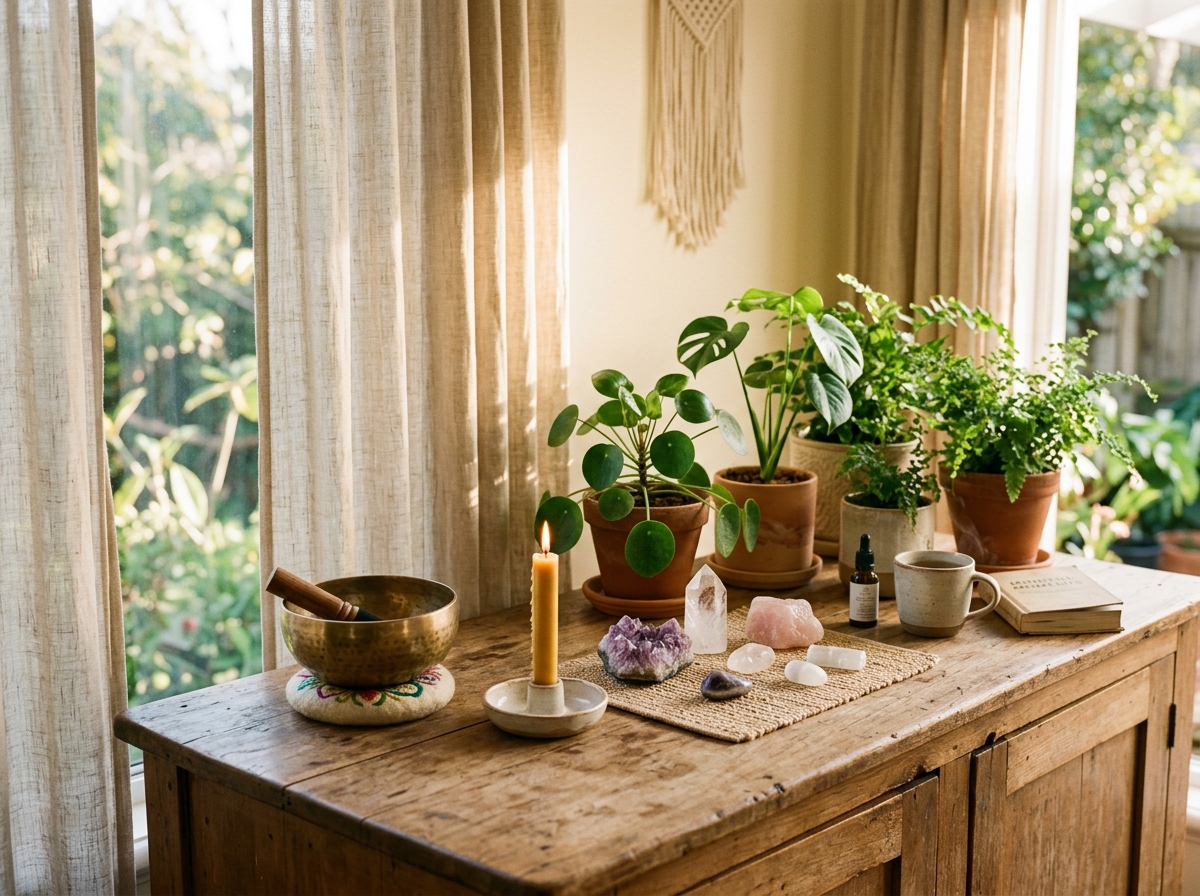
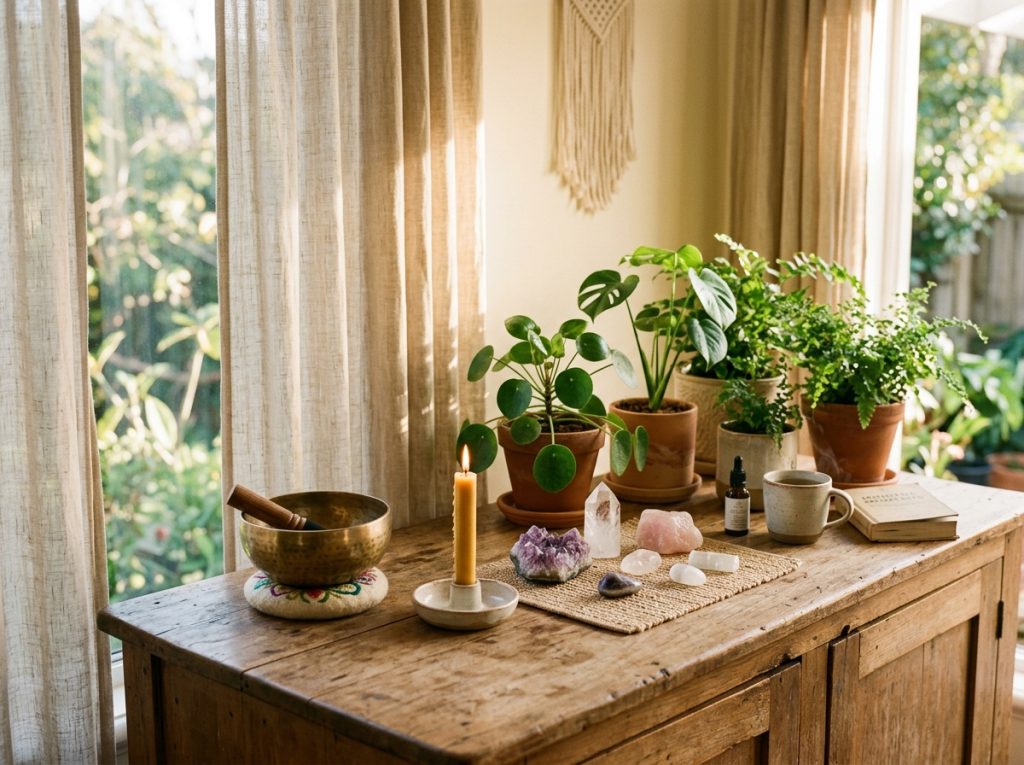
- Sound clearing using singing bowls, bells, or even clapping in corners to break up stagnant energy
- Intentional decluttering — releasing objects that carry heavy memories or no longer align with your current self
- Opening windows regularly to allow fresh air and natural light to circulate and renew the space
- Setting conscious intentions for each room, defining what energy you want it to hold and support
These are not superstitions. They are acts of energetic stewardship — a recognition that you are the guardian of your own environment.
Designing a High-Vibe Environment for Personal Growth
Living a spiritual lifestyle means designing your environment with the same care and intentionality you bring to your inner work. Your outer world is an extension of your inner world, and when the two are in harmony, growth becomes almost effortless.
Consider the following elements when creating a high-vibe environment:
- Nature and living things: Plants, flowers, crystals, and natural materials carry life force energy. Surrounding yourself with nature — even indoors — grounds your nervous system and elevates your mood.
- Color and light: Colors carry vibrational frequencies. Soft blues and greens promote calm and clarity. Warm golds and oranges inspire creativity and warmth. Natural light is irreplaceable — it regulates your circadian rhythm and lifts your spirit.
- Sacred objects and symbols: Meaningful artwork, spiritual symbols, photographs of loved ones, or objects from transformative experiences serve as anchors for your highest intentions.
- Scent: Aromatherapy is a powerful and often underestimated tool. Essential oils like lavender, frankincense, and eucalyptus can shift your emotional state within moments.
- Sound environment: Be mindful of the sounds that fill your space. Uplifting music, nature sounds, or intentional silence all contribute to the energetic quality of your environment.
You do not need a large home or an unlimited budget to create a high-vibe space. You need intention, awareness, and a willingness to treat your environment as sacred.
The People in Your Environment Matter Too
A positive environment is not only about physical space — it is equally about the human energy that fills it. The people you surround yourself with are perhaps the most powerful environmental factor in your spiritual and personal growth journey.
There is a well-known principle that you become the average of the five people you spend the most time with. From a spiritual perspective, this goes even deeper. The people in your inner circle influence your beliefs, your emotional baseline, your sense of possibility, and your energetic frequency. Relationships that are rooted in mutual respect, genuine encouragement, and shared growth are among the most powerful catalysts for transformation available to you.
This does not mean cutting people out of your life carelessly or without compassion. It means becoming more conscious about where you invest your energy and who you allow into your most intimate spaces — physical, emotional, and spiritual.
Ask yourself honestly:
- Do the people around me inspire me to grow, or do they keep me small?
- Do I feel energized or depleted after spending time with them?
- Are my closest relationships rooted in authenticity and mutual elevation?
Choosing your human environment with discernment is one of the most loving and courageous acts of a spiritual lifestyle.
Conclusion: Your Environment Is Your Practice
The path of a spiritual lifestyle is not confined to the hours you spend in meditation or journaling. It extends into every corner of your life — including the spaces you live in, the energy you cultivate, and the people you choose to walk beside. When you begin to treat your environment as an active participant in your growth, everything shifts.
You stop waiting for transformation to arrive from the outside and start creating the conditions for it from within — and around — you. Your home becomes a sanctuary. Your relationships become mirrors of your highest values. Your daily surroundings become a living, breathing expression of the life you are intentionally building.
Start small. Clear one corner. Open one window. Light one candle with intention. The energy of positive environments is not something you find — it is something you create, one conscious choice at a time.