
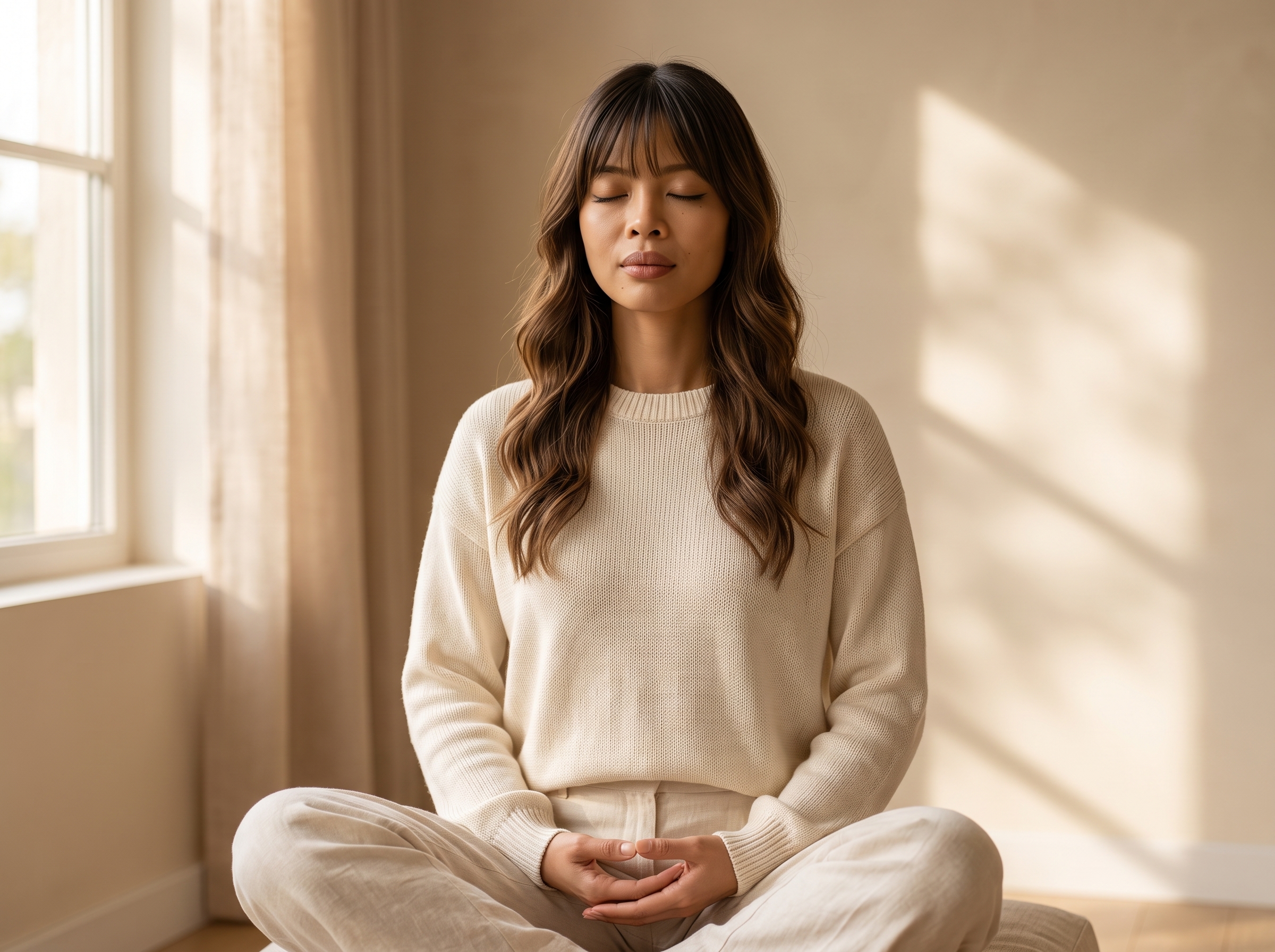
Inner peace is one of those phrases we hear constantly — in meditation apps, on motivational posters, in wellness retreats. But what does inner peace actually feel like when you strip away the aesthetics and the Instagram captions? What does it feel like in your body, your mind, your daily choices? If you’ve been chasing it without quite knowing what you’re looking for, you’re not alone. Most of us were never taught what real stillness feels like — only that we should want it.
This post is an honest, grounded exploration of what inner peace truly is, how to recognize it when it arrives, and how to stop mistaking numbness, avoidance, or forced positivity for the real thing.
Inner Peace Is Not What Most People Think It Is
Let’s start by dismantling the myth. Inner peace is not the absence of emotion. It’s not a permanent state of bliss where nothing bothers you and life flows effortlessly. It’s not achieved by thinking happy thoughts or pretending difficult things don’t exist.
Many people confuse inner peace with emotional suppression. They go quiet, they stop reacting, they detach — and they call it peace. But that’s not stillness. That’s shutdown. True inner peace coexists with emotion. You can feel grief and still be at peace. You can feel uncertainty and still be grounded. The difference is that the emotion moves through you rather than consuming you.
Inner peace is also not a destination you arrive at once and stay forever. It’s more like a frequency you learn to return to — a home base inside yourself that becomes easier to find the more you practice.
What Inner Peace Actually Feels Like in the Body and Mind
When inner peace is genuinely present, it has a very specific quality. Here’s what people who have cultivated it often describe:
- A quiet steadiness in the chest. Not excitement, not numbness — just a calm, settled feeling, like still water rather than a frozen lake.
- Thoughts that slow down. The mental chatter doesn’t disappear entirely, but it loses its urgency. You notice thoughts without being hijacked by them.
- A sense of being okay right now. Not in the future when things are fixed, not in the past when things were better — but genuinely okay in this moment, even if this moment is imperfect.
- Less need for external validation. When you’re at peace internally, you stop needing the world to constantly confirm that you’re enough, that you’re loved, that you’re on the right path.
- Responses instead of reactions. You find yourself pausing before you speak. You feel triggered less easily, and when you are triggered, you recover faster.
- A softness in the body. Shoulders drop. Jaw unclenches. Breathing deepens without effort. The body knows peace before the mind does.
This is what inner peace feels like — not a dramatic transformation, but a quiet, consistent sense of being rooted in yourself.
The Spiritual Dimension of Inner Peace
For many people, inner peace has a deeply spiritual quality — and that makes sense. When you’re at peace, there’s often a felt sense of connection to something larger than your individual worries and storylines. Whether you call that God, the universe, your higher self, or simply life itself, peace tends to open a doorway to that connection.
Spiritually, inner peace often arrives when we stop fighting what is. Not in a passive, defeated way — but in a surrendered, trusting way. There’s a recognition that you don’t have to control everything. That life has its own intelligence. That you are held, even when things are hard.
This doesn’t require a specific religion or belief system. It simply requires a willingness to loosen your grip on the need to manage every outcome. Many spiritual traditions — from Buddhism to Christian mysticism to Indigenous wisdom — point to the same truth: peace lives beneath the noise of the ego. It’s not something you create. It’s something you uncover.
Practices like meditation, prayer, time in nature, breathwork, and journaling can all help thin the veil between your busy surface mind and the deeper stillness that already exists within you.
Practical Ways to Cultivate Inner Peace in Daily Life
Understanding what inner peace feels like is one thing. Learning to access it regularly is another. Here are actionable ways to begin building that inner stillness into your everyday life:
- Start your morning in silence. Even five minutes without your phone, without noise, without input — just sitting with yourself — begins to train your nervous system toward calm.
- Practice the pause. Before responding to a stressful email, a difficult conversation, or a triggering moment, take one conscious breath. That pause is where peace lives.
- Reduce the noise. Constant media consumption, social comparison, and information overload are enemies of inner peace. Audit what you’re consuming and ask whether it’s adding to your clarity or your chaos.
- Feel your feelings fully. Counterintuitively, peace comes faster when you stop running from discomfort. Allow yourself to feel what’s there — cry if you need to, journal it out, move your body. Emotions that are felt are emotions that can release.
- Return to your body. Anxiety lives in the future. Rumination lives in the past. Your body only exists in the present. Grounding practices — walking barefoot, slow breathing, stretching — bring you back to now, where peace is always available.
- Let go of what isn’t yours to carry. A significant portion of our mental unrest comes from carrying other people’s problems, expectations, and emotions. Practice discernment about what is truly yours to hold.
- Celebrate small moments of stillness. Peace builds through repetition. Notice when you feel it — even briefly — and acknowledge it. What you appreciate, you amplify.
Conclusion: Peace Is Already Inside You
The most important thing to understand about inner peace is that you are not trying to import something foreign into your life. You are trying to return to something that was always there — beneath the conditioning, the fear, the busyness, and the noise.
It doesn’t require a perfect life. It doesn’t require everything to be resolved. It doesn’t require you to be a certain kind of spiritual person or to have it all figured out. Inner peace is available to you right now, in the middle of your real, complicated, beautifully imperfect life.
The path to it is not about doing more. It’s about becoming more present, more honest, more willing to let go. It’s about choosing — again and again — to come back to yourself.
And the more you do, the more you’ll recognize that quiet, steady feeling in your chest. That’s it. That’s what you’ve been looking for. That’s inner peace — and it’s already yours.