Tag: personal

  • 13 Top Billionaires’ Tips on Positive Thinking—and Why It Matters

    13 Top Billionaires’ Tips on Positive Thinking—and Why It Matters

    Reading Time: 5 minutes

    14929512628_ac1cf7d648_h

    In popular culture, people know that they are supposed to “think positive.” We all sort of know that we should scotch-tape affirmations to our bathroom mirrors and say “I love you” to ourselves, and keep our chins up (presumably while reading those mirror-stuck affirmations)

    But why?

    Well, on the surface of it, if you think positive, you’re not thinking negative, and therefore, you’re not grumpy and depressed. That’s a pretty good reason on its own. After all, who else but a poet or an emo musician wants to be grumpy and depressed?

    But research shows that there are very real and measurable benefits to consciously cultivating and maintaining a positive, optimistic view on life.

    The Mayo Clinic has proved conclusively that optimists have lower levels of cardiovascular disease and longer life-spans. Furthermore, they found that pessimists’ health deteriorated more speedily as they aged.

    Researchers at Yale and the University of Colorado discovered that pessimism is correlated with a diminished immune response to tumors and infection.

    Dr. Martin Seligman, the founder of Positive Psychology, has done landmark work that shows that positive, optimistic people have deeper and broader social networks, are more effective communicators, and are more resilient, seeing failure as a learning experience rather than as a confirmation of their ineptness, and therefore they believe they can do better in the future.

    Moreso, in a broad study of insurance salespeople, he found that the optimistic ones sold 37% more policies than pessimists, who were twice as likely to abandon their career during their first 12 months of employment.

    Seligman gives guidelines on how to cultivate optimism for those of us who have developed negative habits in his book, Learned Optimism.

    But you don’t have to only look at the research to see that a positive outlook on life and optimism breeds success. When you look at the lives of billionaire innovators, you see that a positive mindset keeps the minds of the highly successful focused on what is possible rather than on what blocks them; on alternatives rather than on roadblocks; on creative solutions rather than on blame.

    1. Imagine you’re on the threshold of success.

    Andrew Carnegie, though often viewed as a shrewd and tight-fisted Scotsman, was actually a veritable starburst of sunny optimism.

    “Think of yourself as on the threshold of unparalleled success. A whole, clear, glorious life lies before you. Achieve! Achieve!”

    Carnegie, who famously hired Napoleon Hill to gather up the wisdom of the rich and powerful in a project that produced the book Think and Grow Rich, grounded his optimism in utter 100% responsibility in his own internal resources.

    “Immense power is acquired by assuring yourself in your secret reveries that you were born to control affairs.”

    Positivity gives the mega-successful the internal fuel to power through downturns and what others would call failure.

    2. Keep moving forward.

    Mark Zuckerberg veritably defined our fast-paced innovation culture with his most famous quote:

    “Fail fast and break things.”

    3. Think like a queen.

    Or in Oprah’s words:

    “Think like a queen. A queen is not afraid to fail. Failure is another stepping stone to greatness.”

    4. Failure isn’t the end; it is the beginning.

    Failure among billionaires is understood to be part of the creative whirlwind that is the very life of a business. Success is not an endpoint. It’s merely a link in the continuing spiral.

    “Failure is just a resting place. It is an opportunity to begin again more intelligently.”

    – Henry Ford

    “I have not failed. I have just found 10,000 ways that won’t work.”

    – Thomas Edison

    5. Abundant chance is all around you.

    Sheldon Adelson, the toilet-kit salesman come multi-billionaire mastermind of the Las Vegas Sands Corporation expresses the optimistic mindset that failure is not only necessary, but that opportunity is unlimited.

    “For me, businesses are like buses. You stand on a corner and you don’t like where the first bus is going? Wait ten minutes and take another. Don’t like that one? They’ll just keep coming. There’s no end to buses or businesses.”

    6. Find the courage to continue.

    Optimism may come easy to some. For others, it’s the cultivated result of another quality, which Churchill identified as courage:

    “Success is not final, failure is not fatal; it is the courage to continue that counts.”

    7. Own your mistakes—

    Optimism and positive thinking feed our courage. Courage need not be heroic. Rather it may merely be the cool-headed outgrowth of a positive belief in yourself.

    When Howard Schultz discovered that one of his most costly innovations had utterly flopped and cost the company nearly $100 million, he walked into his boardroom, looked his board in the eye and said, “Tactical mistake. Next.” No hand-wringing. No self-loathing. In fact, his entire ethos is summarized in the title of his memoir, “Onward.”

    8. —and then move on.

    Similarly, Steve Jobs:

    “Sometimes when you innovate, you make mistakes. It is best to admit them quickly, and get on with improving your other innovations.”

    Jobs elaborated on his philosophy by applying his belief in innovation not only to his work but to himself as well.

    “If you want to live your life in a creative way, as an artist, you have to not look back too much. You have to be willing to take whatever you’ve done and whoever you were and throw them away.”

    An optimist is open to the adventure of self-growth and doesn’t cling to the past or present as a pessimist might, believing things can only get worse.

    9. Trust your hard work.

    Optimism is akin to faith, not merely in yourself but in something greater than yourself. Jobs, a noted mystic, put it this way:

    “You can’t connect the dots looking forward; you can only connect them looking backward. So you have to trust that the dots will somehow connect in your future. You have to trust in something — your gut, destiny, life, karma, whatever. This approach has never let me down, and it has made all the difference in my life.”

    10. Seek to help others.

    Billionaires optimistically believe in a better world and see their efforts as contributing to it. As Peter Diamantis observed:

    “The best way to become a billionaire is to help a billion people.”

    Sergei Brin, Co-Founder of Google, when asked what really drove him, and what spurred his company to its stratospheric growth, replied:

    “I would like to see anyone be able to achieve their dreams, and that’s what this organization does”

    11. When in doubt, don’t be evil.

    In fact, Google’s well-known slogan “Don’t be evil” stemmed from nothing other than a profoundly positive intent:

    “We have tried to define precisely what it means to be a force for good—always do the right, ethical thing. Ultimately, “Don’t be evil” seems the easiest way to summarize it”

    12. Have high expectations of yourself.

    Billionaires often seek to create something great. Some are driven by the desire to have a great impact. Others just expect that greatness is before them. As Sam Walton says:

    “High expectations are the key to everything.”

    13. Be relentless.

    However, this doesn’t mean that billionaires go about their businesses like starry-eyed Pollyannas. Kazuo Inamori, a Japanese entrepreneur who founded two multi-billion dollar companies claims that while developing a new product or strategy, you begin optimistically.

    However, once the planning stage begins, he says you must “become a pessimist” in order to spot every obstacle in the way. Then, he says, he returns to optimism for the execution phase.

    In the end, billionaires teach us that optimism is not a gift. It is a strategy.

    Featured photo credit: Markus Spiske via imcreator.com

    The post 13 Top Billionaires’ Tips on Positive Thinking—and Why It Matters appeared first on Lifehack.

    Source: Lifestyle

  • Surrounded by Idiots: Understanding and Dealing with Different Personality Types

    Surrounded by Idiots: Understanding and Dealing with Different Personality Types

    Reading Time: 2 minutes
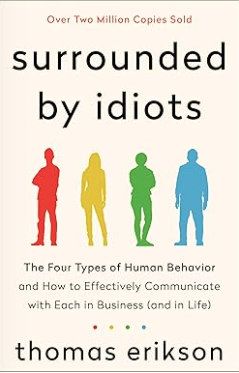
    Surrounded by Idiots
    Surrounded by Idiots: Understanding and Dealing with Different Personality Types


    Book review by Maria Shinta

    Surrounded by Idiots” by Thomas Erikson is a comprehensive guide to understanding and dealing with different personality types. Through engaging anecdotes, practical examples, and insightful analysis, Erikson explores the four main personality types: Red, Blue, Yellow, and Green. By identifying and understanding these personality types, readers can improve their communication skills, enhance their relationships, and easily navigate various social situations.

    Chapter 1: The Four-Color Personalities

    In the opening chapter, Erikson introduces readers to the concept of the four color personalities: Red, Blue, Yellow, and Green. Each color represents distinct traits, behaviors, and communication styles. Understanding these colors is essential for effective communication and building successful relationships.

    Chapter 2: The Red Personality

    The Red personality is characterized by ambition, assertiveness, and decisiveness. Reds are goal-oriented individuals who thrive in leadership roles and value efficiency and results. Erikson provides insights into how to recognize and interact with Reds in both personal and professional settings.

    Chapter 3: The Blue Personality

    Blues are known for their analytical thinking, attention to detail, and emphasis on rules and procedures. They are often logical and rational, preferring structure and order in their lives. In this chapter, Erikson delves into the unique characteristics of Blues and offers strategies for communicating effectively with them.

    Chapter 4: The Yellow Personality

    Yellows are sociable, energetic, and spontaneous individuals who enjoy being the center of attention. They are optimistic and enthusiastic, often seeking excitement and new experiences. Erikson explores the strengths and weaknesses of Yellows and provides tips for engaging with them in various social contexts.

    Chapter 5: The Green Personality

    Greens are empathetic, harmonious, and compassionate individuals who value relationships and personal growth. They are often diplomatic and peace-loving, striving to maintain harmony in their interactions with others. In this chapter, Erikson discusses how to connect with Greens and build meaningful relationships based on understanding and mutual respect.

    Chapter 6: Communication Strategies for Each Personality Type

    Building on the insights from the previous chapters, Erikson offers practical communication strategies tailored to each personality type. Whether interacting with Reds, Blues, Yellows, or Greens, understanding their communication preferences and adapting your approach accordingly is key to effective communication and relationship-building.

    Chapter 7: Dealing with Conflict and Difficult Situations

    Conflict is inevitable in any relationship, but knowing how to navigate it effectively is essential for maintaining healthy connections. In this chapter, Erikson explores common sources of conflict and offers strategies for resolving disputes and managing difficult situations with each personality type.

    Chapter 8: Applying the Four Color Personalities in the Real World

    In the final chapter, Erikson discusses how to apply the principles of the four color personalities in various real-world scenarios, such as the workplace, family dynamics, and social settings. By recognizing and understanding the different personality types, readers can enhance their communication skills, strengthen their relationships, and achieve greater success and fulfillment in all aspects of their lives.

    Conclusion:

    “Surrounded by Idiots” provides invaluable insights into the complexities of human behavior and communication. By understanding the four color personalities and learning how to adapt your communication style accordingly, you can improve your relationships, navigate conflicts more effectively, and achieve greater harmony and success in both your personal and professional life. With its practical advice and engaging anecdotes, this book is a must-read for anyone looking to unlock the secrets of human interaction.

  • Boost Your Wealth with Cryptocurrency Strategies!

    Reading Time: 4 minutes

    Do you want to have financial freedom? Do you want a flexible hour to work?

    What would you do if you could have financial freedom by investing in lucrative forex trading and cryptocurrency?

    Start your New Year’s resolution by investing in cryptocurrency.

    There are few cryptocurrencies on the market right now, but one of the well-known ones is Bitcoin. Ever since its introduction in 2009, cryptocurrencies’ ability to function as an alternative, anonymous payment method has completely disrupted the financial services industry. Having pioneered blockchain technology that provides users with an incomparable level of protection and transparency, widely used cryptocurrencies like Bitcoin, Ether, Dash, Zcash, Dogecoin, and Monero are gaining ground all over the world and are purported to be the future of e-commerce.

    Its worldwide acceptance is due to its ability to change how transactions are conducted on many electronic platforms. Conventionally, it takes about three business days to confirm electronic card transactions. Bitcoin transactions, on the other hand, take place a few minutes to be confirmed on the blockchain.

    When Is The Best Time to Buy Cryptocurrencies?

    The honest answer is “Why not both”. Why not buy Bitcoin today and wait it out too? Buy Bitcoin when it’s priced lower than its average historical performance.

    Hantech Investment

    Is It A Good Idea To Use Bitcoin in 2024 Or Wait?

    With giant retailers like Microsoft, Dell, and Overstock accepting Bitcoin payments, other businesses should not be left behind as well. In 2016, more than 150,000 merchants globally accepted payment through the world’s most popular cryptocurrency, Bitcoin—and major retailers like Walmart, Sears, eBay, Apple, Steam, Expedia, and even  Subway.

    Top 8 Reasons Why Businesses Should Adopt Bitcoins

    Forward-thinking businesses around the world are busy joining the cryptocurrency trend to improve their cash flows, reduce transaction costs, and scale geographical barriers. But is accepting Bitcoin payments a worthwhile endeavor for businesses? Discussed below are 

    8 reasons why businesses should adopt payments in bitcoins.

    1. No Third Parties

    Most payment options often involve a third party. For instance, when you have money in your bank account, it is the bank that has the ultimate say despite the money being yours. If they deem it necessary, they can freeze your accounts and render you moneyless. As a business, this can result in a lot of losses. With bitcoins, only the buyer and the seller are involved and they are not under the mercy of anybody. When you buy bitcoins, you get to store them in your wallet. You can transact using the bitcoins if you so wish without any external influence.

    2. No Government Influence

    Since bitcoins are not regulated centrally, the government does not have the power to keep an eye on your transactions. Bitcoin transactions do not reveal the identities of the transacting parties. The government cannot take away your currency like what happened in Cyprus in 2013 when the government decided to take away money that belonged to private investors because the economy was not performing well. The people who had saved money in their bank accounts could not help as they watched their savings sublime. Bitcoins are not controlled by the government, as such, you can always be assured of the safety of your bitcoins.

    3. Reduced Incidences of Fraud

    Businesses that accept bitcoins can be generally classified as being fraud-free. Whereas all the transactions are internet-based, their work is similar to that of cash. This currency cannot be counterfeited. Once you authorize a payment and it goes through, the details of the transactions get stored in a public ledger where anyone can access them. The transactions, once complete, are irreversible. Credit cards get hacked all the time by fraudsters. Bank accounts can also be hacked and funds transferred. Minor errors in name details, for instance, can result in funds being transferred to the wrong accounts. But with bitcoins, businesses can rest assured that their bitcoins are stored securely without any chance of being stolen.

    4. Global Currency

    Bitcoins can be used by anyone from whichever part of the world provided that the said persons can access a computer phone, and internet connection. People in America use the same bitcoins as those from Australia, Africa, China, or even India. This is a global currency with the same structure and uses all over the world. A person in South Korea can use bitcoins to make a payment for goods in Brazil. By paying using bitcoins, people will have avoided the need to exchange the currencies which can be very costly. Bitcoins allow people in different parts of the world to transact without having to go through foreign cash exchanges.

    5. Cheaper Costs

    Digital currencies cost very little to transact with as compared to normal currencies. When transacting using normal currencies, banks will charge you for handling the money and will levy high exchange rates that favor them. This is not the case with cryptocurrencies. Most Bitcoin transactions cost about 1% of the total transaction value. Since there is no third party to levy unreasonable transaction commissions, businesses will find this to be convenient. This lower cost will be transferred to the consumer who might find it cheaper to buy more goods. This means well as businesses will continue to grow.

    6. New Markets

    The use of digital currencies has enabled businesses to access new niche markets that might not have been accessible before. For instance, in some parts of Africa and Asia, very few people have access to good banking services. This often locks them out as they cannot transact with people in other geographical areas. Since digital currencies are decentralized, they can be used remotely as long as one can access a phone and mobile internet. This allowed merchants to trade with people in areas that were previously termed as being primitive and inaccessible. Adopting this digital currency means that you can obtain goods from the remotest part of India or Brazil where people cannot access banks.

    7. Competitive Edge

    For your business to be able to stand out, prospective customers must find it to be appealing. Your business will look tech-savvy by adopting cryptocurrencies. You will be able to get customers from all over the world for your goods or services. A business that provides its customers with several payment options, including the option of paying using bitcoins, is more attractive than a business that only allows payments made using credit cards. Being able to stand out and becoming an industry leader is the dream of every business.

    8. Faster Transaction Times

    Normal transactions often take a very long time, especially when making international bank transfers. You might have to wait for up to one week before funds can be successfully transferred from one country to the other. It is even worse when you want to transact during weekends or holidays. The delays can be frustrating. However, with bitcoins, you can complete a cross-border transaction in just a few minutes.  Cryptocurrencies can be used at any time of the day, and any day of the year. You can transact during holidays, weekends, or even at night. Faster transaction times mean good for business.

  • How Does Procrastination Affect Your Sense of Happiness?

    How Does Procrastination Affect Your Sense of Happiness?

    Reading Time: 4 minutes

    In September 2014, two British professors embarked on a study to uncover the repercussions of delayed assignment submissions among students. The outcomes of their research were astonishing, shedding light on a significant incentive for students to overcome procrastination.

    Professors David Arnott and Scott Dacko set out to identify procrastinators as those who consistently submitted their end-of-term tasks on the final day. They examined five years’ worth of submission data from 777 marketing students at Warwick Business School. Surprisingly, only around a hundred students out of the cohort managed to submit their assignments ahead of the deadline, while a staggering 669 students waited until the last 24 hours to hand in their tasks. In essence, a staggering 86% of students were categorized as procrastinators.

    A parallel study conducted at the University of Vermont in 1984 unveiled that 46% of students admitted to procrastinating when it came to academic paper writing. This statistic may not be entirely astonishing, given the tendency for students to procrastinate on their homework worldwide. It’s a common phenomenon, particularly considering the hectic schedules that college-goers often face. Thus, the 86% figure might not be entirely unexpected.

    However, the true revelation emerged within the final 24 hours. As Arnott and Dacko meticulously analyzed the submission data, they observed a troubling pattern unfolding on the last day. Students who submitted their assignments within later hours began to receive progressively lower marks. This decline occurred incrementally, with each passing hour leading to diminished scores. For instance, a student who submitted at 3 pm received lower marks compared to those who had submitted at 2 pm.

    It appeared that every hour closer to the deadline was eroding the quality of their work and subsequently impacting their grades. Strikingly, those who opted for last-minute submissions experienced a substantial 5% drop in marks compared to their peers who had submitted their assignments earlier, even before the final day commenced. This 5% discrepancy could be pivotal, potentially translating to a lower grade—a ‘B’ could easily transform into a ‘C+’ due to late submission.

    The Implications of Procrastination on Happiness

    Undoubtedly, procrastination is a foe to happiness. Numerous studies and surveys have converged to establish this connection. The Procrastination Research Group conducted a comprehensive survey involving over 10,000 respondents, revealing that a staggering 94% of participants acknowledged the negative impact of procrastination on their overall happiness.

    According to insights from “Procrastination and Science,” nearly 70% of habitual procrastinators reported lower levels of happiness compared to the average individual. The Warwick study’s findings further supported this notion, as it became evident that waiting until the eleventh hour to complete assignments correlated with poorer grades, ultimately affecting one’s sense of accomplishment and contentment.

    The far-reaching consequences of habitual procrastination extend beyond academics. In the realm of relationships, procrastination can lead to damaged bonds, foster a perception of negligence, and hinder career advancement. Procrastinators often resort to fabricating excuses for their delays, but their deception is frequently uncovered, resulting in unfavorable outcomes. These setbacks can indeed erode a significant portion of one’s happiness.

    The Root Causes of Procrastination

    Procrastination is intricately intertwined with one’s perception of time and is often fueled by a complex interplay of psychological factors, particularly self-esteem-related issues. The primary triggers for procrastination include:

    1. Lack of Interest: Tasks deemed uninteresting or devoid of enjoyment tend to be postponed indefinitely. This behavior stems from the basic human inclination to avoid pain and pursue pleasure, a principle known as task aversiveness.
    2. Impulsiveness: Paradoxically, procrastinators often exhibit impulsivity, leading to an inability to manage goals effectively. This impulsiveness drives them to hop from one task to another, leaving a trail of unfinished endeavors.
    3. Low Self-Confidence: Procrastination frequently arises from a lack of confidence in one’s abilities, fostering fear of failure or success. Low self-esteem plays a pivotal role in perpetuating this behavior.
    4. Anxiety: As deadlines loom closer, anxiety can trigger heightened procrastination. This anxiety-driven response leads individuals to engage in unrelated activities to distract themselves from the impending task.
    5. Unclear Goals: Lack of clarity in goals, distant future objectives, or a complete absence of goals can contribute to procrastination.
    6. Perfectionism: A pursuit of perfection often results in prolonged delays. While certain fields demand meticulousness, excessive perfectionism can hinder timely completion.
    7. Hereditary Factors: Research suggests that up to 46% of procrastination tendencies could be heritable. Genetic predisposition might play a role, but environmental factors also contribute significantly.
    8. Mental Health: Procrastination frequently accompanies various psychological conditions, such as borderline personality disorder, depression, anxiety, addiction, and strained relationships.

    Overcoming Procrastination through Scientific Insights

    Tackling procrastination requires a comprehensive approach rooted in scientific understanding:

    1. Avoidance: The most effective approach is to actively avoid procrastination. Educators can identify habitual procrastinators and assist them in cultivating improved study habits. Setting clear, achievable goals, breaking them into smaller sub-goals, and tracking progress at defined intervals are key strategies.
    2. Growth Mindset: Adopting a growth mindset, as outlined by psychologist Carol Dweck, fosters a belief in the potential for development through dedication and effort. Embracing challenges as opportunities for growth enhances self-worth and encourages tackling tasks head-on.
    3. Acceptance and Commitment Therapy (ACT): Incorporating mindfulness-based psychotherapy like ACT can reduce procrastination, particularly in academic settings. Accepting external factors beyond personal control and committing to enriching actions can mitigate this behavior.

    In conclusion, the research conducted by professors Arnott and Dacko, coupled with broader studies on procrastination, underscores the detrimental effects of procrastination on academic performance and overall happiness. While procrastination is a common inclination, its roots often lie in complex psychological dynamics. Employing evidence-based strategies can empower individuals to overcome this hindrance and embrace a more proactive and fulfilling approach to their pursuits.

  • “Starting Out in Photography: Try These Fun and Interesting Effects to Achieve Better Quality Results Today”

    “Starting Out in Photography: Try These Fun and Interesting Effects to Achieve Better Quality Results Today”

    Reading Time: 3 minutes

    Have you considered starting your photography career? If so, then this article is for you! We’ll go over the essential pieces of equipment you need to launch your photography career.

    Are you ready to take the plunge into photography? Do you have an eye for capturing great moments, but don’t know where to start when it comes to equipment? If so, then this article is just what you need. We’ll cover all the basics that a beginner photographer needs in order to jump-start their career – let’s get started!

    Camera

    Whether you opt for a DSLR or point-and-shoot camera, make sure it aligns with your budget and skill level. So, go out there and start capturing the world around you! And remember, as you continue to grow, keep the rules in mind and trust in the quality of your work. As a beginner photographer, you hold the key to a big and bright future in photography. Join the community of professionals and share your journey today. And always keep in mind that the most significant output comes from within.

    In many cases, photographers learn the art by purchasing a camera – used or new – and exploring different settings and features. Many people prefer learning photography in person or online. (Source: www.adorama.com)

    Use a general setup and take the time to find your passions and interests. From there, you can upgrade or supplement your camera. Here are some things you should keep in mind when you’re looking for your first camera: (Source: iso.500px.com)

    Check for DSLRs and mirrorless cameras (Source: iso.500px.com)

    You can save money by purchasing separate bodies and lenses. Kit lenses are often good enough for a lot of basic shots that you might want to create. (Source: iso.500px.com)

    As a professional photographer, I know the importance of having the right gear. And for beginning photographers, choosing the right camera can be daunting. But don’t worry – with some guidance and research, you’ll soon be on your way to capturing amazing photos.

    When selecting a camera, there are a few key things to keep in mind. DSLRs and mirrorless cameras are popular choices for beginners, as they allow for more control and higher-quality results. It’s also important to consider the body and lens options – while kit lenses can be a good starting point, investing in certain lenses can help achieve better quality and capture certain effects.

    Don’t be afraid to cheat the rules and experiment with different techniques – you might be surprised at the interesting results you can achieve. So hold onto your camera and keep practicing – with time and dedication, you’ll soon be a pro.

    Don’t let that discourage you from starting your photography journey! While kit lenses are a great way to start, investing in better-quality lenses might help achieve cleaner and sharper results.

    In addition to a camera, other necessary items include lenses and tripods.

    Lens

    You will find which lens you need based on your desired shot. Sharp lenses make great long-distance shots, while wide-angle lenses make perfect landscape photos.

    Tripods

    Tripods provide stability for your shots so that even if you have shaky hands, your photo won’t come out blurry. Furthermore, you can experiment with slower shutter speeds without worrying about blurring the image.

    Last but not least, it’s important for beginner photographers to invest in some type of lighting equipment such as a flash or reflector. This will help fill in any shadows and provide more even illumination so that your photos look professional.

    Taking all these items into account, beginning photographers have a lot to consider when starting their journey!

    In summary, any beginner photographer looking to get started will need the right equipment to help them create stunning images.

    A quality camera, as well as flashes, tripods, and filters, are all important tools that can make a huge difference in any photography project.

    With these items, any beginner photographer is sure to take their skills to the next level.

    In conclusion, for any beginner photographer looking to start their photography journey and create stunning images, having the right equipment is crucial.

    Investing in quality cameras, flashes, tripods, and filters can make a significant difference in achieving the desired effect and brightness of the final product.

    However, it’s essential to be careful while using these tools as they might cause blurry or shaky pictures if not used correctly. According to professional photographers, following certain rules and guidelines, along with the dedicated practice, can help beginners reach an advanced level of photography soon.

    Additionally, sharing your work and getting feedback from loved ones or fellow photographers can allow you to improve further.

    While some equipment may seem pretty expensive, it is ultimately worth investing in excellent gear that will last longer and deliver the perfect results.

    So don’t hesitate to start your new hobby or career as a photographer and say goodbye to mediocre photos forever!

     
  • How to Type Faster: 12 Typing Tips and Techniques

    How to Type Faster: 12 Typing Tips and Techniques

    Reading Time: 4 minutesHow to type faster?

    Typing is a lot of fun, especially if you’re the type of person who loves to write. Whenever an idea comes to your head or you just want to communicate something, the feeling of scribbling things down in a computer is awesome.

    Do you know that being able to type faster makes you more productive? In fact, it’ll save you 21 days every year just by typing faster!

    Many people look up to master typists and wish that to handle a keyboard like they do. The truth is that none of them started that way, and they had to learn.

    In this piece, you’ll learn how to type faster with some useful tips and techniques:
    1. Work on Your Workspace and Typing Area
    A lot of people believe that fast and correct typing will start when you can master the keyboard. But the truth is, you will need to begin with getting a workspace that is clean, properly ventilated, and comfortable. Also, for optimal typing, you will need to get a table and not out your laptop or computer on your lap.

    If you will be working for an extended period, make sure that you’re comfortable.
    2. Fix Your Posture
    If you want to type well, the correct posture will be seated, straight backed, and with your feet planted a little apart, flat on the ground. You wrists should also be positioned in such a way that your fingers can cover the keyboard. Tilt your head a bit as you can look at the screen properly as well.

    Adjust your office chair so you’ll be able to easily play with the seat and get a proper posture.
    3. Hold Your Posture
    It is also very important that you keep this position as you type. Ensure that your posture is good, and this way, you will be able to avoid getting aches on your wrists. These aches have a way of slowing you down and keeping you out of rhythm.

    Keep your back and shoulders from hunching, and while relaxation should be your key goal as you work on, also be sure to stay upright.
    4. Familiarize Yourself with the Keyboard
    The keyboard is your tool here, so you will need to get to know it. Fortunately for you, most keyboards that you see will make use of the same layout; the QWERTY layout. It is called that because of the letters that make the top left corner. You’ll also find that a lot of keyboards have keys around these main ones that do several tings.

    Here’s a nice video to help you familiarize yourself with the keyboard:

    So, work on memorizing the positions of the letter keys, as well as some of the most used punctuation marks. You will need to understand where they are without looking at the keyboard. This is the only way you can learn to type fast.
    5. Close Your Eyes and Say the Keys out Loud as You Press Them
    Another great way to get to know the positions of these letters is to look away from them and directly at the screen. Then, pronounce the keys as you press them and see if you’re correct. This step will go a long way in helping you to memorize the keys, and it can easily help you
    6. Start Slowly with Touch-Typing
    Improving your speed as you type is a matter of developing your skill over time. However, the quickest way to master typing will be touch typing. If this is your first time with touch typing, then you might spend a lot of time on this step. However, once you can type without looking at the keys, your speed will increase.

    Now, this typing method might feel a bit alien, but you’ll improve with time.
    7. Stick with It and Don’t Look at Your Hands
    The whole essence of this step is to keep you from looking at your keyboard as you type, so that your fingers are made to learn how the keys work.

    Again, you might find that your speed reduces when you begin, but just stick to it. Touch typing will help you to reach higher speeds and master it.
    8. Practice, Practice, Practice
    Mastering the touch typing technique will prove to be a bit finicky, but once your posture is up and you get your fingers where they should be, you can only improve by practicing.

    Spare some time on a daily basis to practice and master both accuracy and speed. With continuous practice, you will also notice that you make fewer errors with time.
    9. Check out Some Online Games
    There are also some websites that can help you with your practicing. They score you and record your words per minute, so you can try improving your record and competing with others as well. Here’re some of the nice sites:

    Typing Club
    The Typing Cat
    Typing.com

    10. Dictation Practice
    If you don’t know what you can type, another alternative to getting good practice is to listen to something and try to type as you hear the words. There is no limit to the kind of things you can type, and you can even make the practice process more fun. So, get an e-book, an online lecture, or listen to a talk show and type. You could watch a TV show as well.
    11. Monitor Your Progress
    Ensure that you keep track of the progress you make as you go on. But it is important that you don’t get obsessed with how many words you are able to type in a minute. Rather, ensure that you stay comfortable while you type. With time, your words per minute will increase, and you’ll be able to clock up some high numbers.
    12. Get Some Formal Training If You Want
    There are actually a lot of specially designed courses and programs that will boost your typing ability. If you’re willing to improve your skill, get any of these and see how well they work for you:

    Byte Back
    Peter’s Online Typing Course

    Don’t just finish reading this article and expect that you’ll type faster. You do need to work on your skills. It takes time to type fast but, practice makes perfect!
    More About How to Type Fast

    How To Save 21 Days Per Year By Typing Fast
    8 Most Effective Games and Apps to Learn to Type Fast

    Source: Lifehack

  • Invest in Yourself

    Invest in Yourself

    Reading Time: 5 minutes

    What’s your new year’s resolution?

    Do you want to have financial freedom? Do you want a flexible hour to work?

    What would you do if you have the capability to have financial freedom by investing on a lucrative forex trading and cryptocurrency?

    Start your new year’s resolution by investing in cryptocurrency.

    bitcoin is the future
    Invest in yourself

    There are few cryptocurrencies on the market right now, but one of the well-known ones is bitcoin. Ever since its introduction in 2009, cryptocurrencies’ ability to function as an alternative, anonymous payment method has completely disrupted the financial services industry. Having pioneered blockchain technology that provides users with incomparable level protection and transparency, widely used cryptocurrencies like Bitcoin, Ether, Dash, Zcash, Dogecoin, and Monero are gaining ground all over the world and are purported to be the future of e-commerce.

    The reason for its worldwide acceptance no other than its ability to change the way the transactions are conducted in many electronic platform. Conventionally, electronic card transactions take approximately three business days to get confirmation. On the other day hand, Bitcoin transaction take few minutes to be confirmed on the blockchain.

    When Is The Best Time Buy Cryptocurrencies?

    NOW.. If only YES and NOW were all you needed to hear and… we’d all be moon bound.

    The honest answer is “why not both”. Why not buy bitcoin today and wait it out too. Buy Bitcoin when it’s priced lower than its average historical performance.

    Is It A Good Idea To Use Bitcoin in 2019 Or Wait?

    With giant retailers like Microsoft, Dell, Overstock accepting bitcoins payment, other business should not be left behind as well. In 2016 it was estimated that more than 150,000 merchants across the globe accepted payment through the world’s most popular cryptocurrency, Bitcoin. Major retailers like WalMart, Sears, eBay, Apple, Steam, Expedia, and even Subway.

    Top 8 Reasons Why Businesses Should Adopt Bitcoins

    Forward-thinking businesses around the world are busy joining the cryptocurrency trend with the aim of improving their cash flows, reducing transaction costs and scaling geographical barriers. But is accepting bitcoin payments a worthwhile endeavor for businesses? Discussed below are 8 reasons why business should adopt payments in bitcoins.

    1. No Third Parties

    Most payment options often involve a third party. For instance, when you have money in your bank account, it is the bank that has the ultimate say despite the money being yours. If they deem it necessary, they can freeze your accounts and render you moneyless. As a business, this can result in a lot of losses. With bitcoins, only the buyer and the seller are involved and they are not under the mercy of anybody. When you buy bitcoins, you get to store them in your wallet. You can transact using the bitcoins if you so wish without any external influence.

    2. No Government Influence

    Since bitcoins are not regulated centrally, the government does not have the power to keep an eye on your transactions. Bitcoin transactions do not reveal identities of the transacting parties. The government cannot take away your currency like it happened in Cyprus in 2013 when the government decided to take away money that belonged to private investors because the economy was not performing well. The people who had saved money in their bank accounts could not help as they watched their savings sublime. Bitcoins are not controlled by the government, as such, you can always be assured of the safety of your bitcoins.

    3. Reduced Incidences of Fraud

    Business that accept bitcoins can be generally classified as being fraud-free. Whereas all the transactions are internet-based, their working is similar to that of cash. This currency cannot be counterfeited. Once you authorize a payment and it goes through, the details of the transactions get stored in a public ledger where anyone can access them. The transactions, once complete, are irreversible. Credit cards get hacked all the time by fraudsters. Bank accounts can also be hacked and funds transferred. Minor errors in name details, for instance, can result in funds being transferred to the wrong accounts. But with bitcoins, business can rest assured that their bitcoins are stored securely without any chance of being stolen.

    4. Global Currency

    Bitcoins can be used by anyone from whichever part of the world provided that the said persons can access a computer or phone, and internet connection. The people in America use the same bitcoins as those from Australia, Africa, China or even India. This is a global currency with the same structure and uses all over the world. A person in South Korea can use bitcoins to make a payment for goods in Brazil. By paying using bitcoins, people will have avoided the need to exchange the currencies which can be very costly. Bitcoins allow people in different parts of the world to transact without having to go through foreign cash exchanges.

    5. Cheaper Costs

    Digital currencies cost very little to transact with as compared to the normal currencies. When transacting using normal currencies, banks will charge you for handling the money and will levy high exchange rates that favor them. This is not the case with cryptocurrencies. Most bitcoin transactions cost about 1% of the total transaction value. Since there is no third party to levy unreasonable transaction commissions, businesses will really find this to be convenient. This lower cost will be transferred to the consumer who might find it cheaper to buy more goods. This means well as businesses will continue to grow.

    6. New Markets

    The use of digital currencies has enabled businesses to access new niche markets that might not have been accessible before. For instance, in some parts of Africa and Asia, very few people have access to good banking services. This often locks them out as they cannot transact with people in other geographical areas. Since digital currencies are decentralized, they can be used remotely as long as once can access a phone and mobile internet. This allows merchants to trade with people in areas that were previously termed as being primitive and inaccessible. Adopting this digital currency means that you can obtain goods from the remotest part of India or Brazil where people cannot access banks.

    7. Competitive Edge

    In order for your business to be able to stand out, prospective customers must find it to be appealing. Your business will look tech-savvy by adopting cryptocurrencies. You will be able to get customers from all over the world for your goods or services. A business that provides its customers with several payment options, including the option of paying using bitcoins, is more attractive than a business that only allows payments made using credit cards. Being able to stand out and becoming an industry leader is the dream of every business.

    8. Faster Transaction Times

    Normal transactions often take a very long time, especially when making international bank transfers. You might have to wait for up to one week before funds can be successfully transferred from one country to the other. It is even worse when you want to transact during weekends or holidays. The delays can be frustrating. However, with bitcoins, you can complete a cross-border transaction in just a few minutes. Cryptocurrencies can be used at any time of the day, and at any day of the year. You can transact during holidays, weekends or even at night. Faster transaction times mean good for business.

    Sources:  https://bitcoinexchangeguide.com/top-reasons-why-businesses-should-accept-bitcoin/ https://nulltx.com/ https://www.coindesk.com/subway-bitcoin-purchase


  • Why You Should Keep a Fitness Journal to Jumpstart Weight Loss

    Why You Should Keep a Fitness Journal to Jumpstart Weight Loss

    Reading Time: 6 minutesHaving a fitness journal is a personal topic to me. In fact, if there’s one thing I probably regret the most in my previous years in the gym, it’s not keeping a proper journal.

    It would’ve made all the difference.

    One question at my exam to getting the national fitness certification, where I placed in the top 3 of the whole country, was “Why one should keep a fitness journal.” You know a topic is important if the authorities print it on an official exam.

    Here are 17 reasons a fitness journal can help you succeed in the gym and beyond:
    1. The Key To Celebration
    Progress equals happiness. – Tony Robbins
    One of the most encouraging acts you can ever do in your life is to track your progress. If you’ve set goals, it’s absolutely crucial for you to know if you’re moving any closer.

    As Tony Robbins, a top-notch motivational speaker and author, said: Progress is happiness. It’s one thing to crave progress and another thing to start measuring it. Here’s when the workout journal comes in handy.
    2. Better Guidance
    If one does not know to which port one is sailing, no wind is favorable. – Lucius Annaeus Seneca
    Imagine if a coach could analyze your whole progress, your weakness and your strengths in less than 5 minutes, without you telling him any word? Well, that’s what a fitness journal is for.

    If you have paid to be coached by a professional in the fitness industry, why not make his life and your progress easier? Use a fitness journal. It’s less hassle for both of us, trust me.
    3. Keep That Competitive Edge
    A group of friends of mine once downloaded a running app. The goal was to keep each other accountable and maybe lose few pounds. What started as a harmless activity resulted in a fierce competitive battle.

    I heard stories of a friend that went for a run at 11pm just to beat the daily mileage amount of a competitor. After 3 months, nearly all of the ambitious contestants were in the best shape ever. Competition is a great tool – use it to your advantage.

    Using a fitness journal can facilitate competition, as all of the information are in one, tiny place. Show a gym buddy of yours your journal and see what happens.
    4. Reducing Your Willpower
    The last thing we all want is to put more stress on our plates. Why should we consciously note down our progress? Shouldn’t the gym clear our heads?

    Yet a workout book can actually lessen the willpower that we need to get to the gym. The fitness journal takes the decision weight off our shoulders that is needed to start the task.

    There’re only two steps to this strategy: 1. Plan your workout in advance and 2. simply execute it.
    5. Face the Truth
    We live in an illusion. Our brain is determining our reality. The fitness journal helps you see the truth. It’s hard to argue with ink.

    We think we simply have “bad genetics”, yet when we look at the written down intensity in the fitness journal it turns out that we haven’t exhausted ourselves properly for the last 6 months. No more excuses here.
    6. Accountability to Yourself
    A coach holds us fully accountable. A fitness journal keeps us accountable partly.

    By looking at our past achievements, we can set the goal to achieve more. A fitness journal can foster our ambition.
    7. See Patterns
    I was blind, but now I see. – Bradley Cooper, Movie: Limitless
    Ever wondered why you don’t feel fit during a day and then make personal best on another? A fitness journal can help you see patterns in your behaviours. What gets measured gets managed.
    8. The Joy of Task Completion
    You know that feeling when you cross of something on your to-do list? It feels awesome. Why not have that same feeling after going to the gym?

    If we write down the results of our training, we get a dopamine rush. It makes us think we’re in control of our destiny.
    9. Know Your Weakness
    Ever noticed that you’re bench pressing more than you’re squatting? In the journal, you see it in writing.

    A fitness journal points out your weaknesses and shows you the areas that need improvement.
    10. Minimize Variables
    The best predictor of future behaviour is past behaviour. – Albert Ellis
    What if your goals were basically guaranteed? Next to having enough reason, we also have to minimize variables. We have to control all there is to reach our goals.
    11. Prevent Excuses
    You’ve noticed that you haven’t made any progress? Look into your fitness journal. It’s most likely not your genetics.

    If we write our progress down, we can see what works, and what doesn’t. This way we can prevent excuses.
    12. Minimize Injuries
    Feel a sting after doing shoulder exercises? Make a note in your fitness journal.

    Before starting the next workout, go through the old workout and act accordingly. Often injuries accumulate after multiple trainings. We can minimize the occurrence of injuries by writing it down in our journal.
    13. Condition Yourself to the Workout
    A lot of professional athletes have routines before they start their training. They either wear a certain wristband, like Lance Armstrong, or have other interesting routines. Success leaves clues.

    Routines increase our performance. Taking out your journal before entering the gym floor tells your brain that it’s go time.
    14. Look like a Pro
    “Have you seen that guy training with a fitness journal? Yes – he must be taking this gym stuff serious.”

    Do you want to be a pro? Act like one. Fake it until you make it. Looking and acting like a professional becomes a self-fulfilling prophecy.
    15. Know Who to Associate With
    The rock band Van Halen had a now-famous “No Brown M&Ms clause” in their gig contract. A standard concert contract called for them to be provided with a package of M&Ms backstage. But with no brown ones.

    Even a single brown M&M in that package, was enough for Van Halen to cancel a scheduled appearance without notice and usually destroy the whole backstage room in a rampage.

    The M&Ms clause was included in Van Halen’s contracts not as a cause of laughter, but because it served a practical purpose: to provide a simple way of determining whether the technical specifications of the contract had been thoroughly read and complied with.

    The fitness journal could be your brown M&M clause when dealing with your fellow gym members. Did that guy just tell you to do a certain workout? To evaluate the advice, scan for a workout journal nearby.

    If you don’t see one, you can just disregard his advice altogether.
    16. Parkinson’s Law – and Why Your Time Is Valuable
    Work expands so as to fill the time available for its completion. – Parkinson’s Law
    The Parkinson’s Law also applies to your fitness results. If you don’t give your workout a max. duration, it will go on for hours on end.

    Pre-determine the sets, reps and exercises that you want to do beforehand. Then go into the gym and execute.
    17. Focus on You
    While I’m a huge believer in motivation through a competitive spirit and external factors, in the end, this journey is about becoming a better you. A healthier, faster, stronger and better person altogether.

    The fitness journal can help you keep your focus on where it should be — on you. In the end, all the notes that you take are focused on your progress and your decisions.
    How to Start a Fitness Journal?
    Starting a fitness journal is simple and easy. You either buy a pre-written book which makes it even easier for you or you buy a blank notebook.

    The variables to track are

    your repetitions
    the total amount of sets
    your exercises

    But you can also track your sleep hours, your rate of percieved exertion (RPE), your daily caloric intake up until your pre-workout intake of caffeine in milligrams.

    I recommend you to start with the 3 basic variables noted before and then add additional ones, once you feel comfortable. The mantra with a fitness journal, as it is with general fitness, is consistency. It’s better to start small and be consistent than to start big and be unsteady.

    Take the fitness journal with you every time you go to the gym and then write down your notes after finishing the set. After a couple of workout days, this becomes second nature and won’t take any time or brain resources at all.
    Final Words
    The reason most people don’t have a fitness journal is, that they assume it’s not worth it. Nothing could be farther from the truth.

    There are plenty of reason to follow a fitness journal. From being a proven blueprint, creating motivation to being a facilitator for personal growth. Having a fitness journal is an absolute necessity if we’re serious about reaching our fitness goals.

    In fact in my opinion, having a professional journal can make all the difference.
    Source: Lifehack

  • 74 Healthy Habits That Will Improve Your Overall Well-Being and Make You Feel Good

    74 Healthy Habits That Will Improve Your Overall Well-Being and Make You Feel Good

    Reading Time: 19 minuteshealthy habits

    Poor health and low energy levels can negatively impact every part of your life. Your creative spark can be destroyed, leaving you with zero inspiration and ideas. Work would become tedious and hard going, and your social life would become a shadow of what it used to be.

    Life for you would no longer be fun. It’s a sorry state of affairs.

    What you need to transform your life is a healthier lifestyle. One that will bring back your natural energy and zest for life.

    By learning the best healthy habits to take and following the tips in this article, you’ll be able to get back to this optimum state.

    What makes a healthy habit?

    You may be surprised to learn that more than 40 percent of the actions you perform every day aren’t decided by you. They’re habits. Habits dictate how we live, how we perform, and the results we achieve in life. This is why it is so important to have strong, positive habits.

    In case you’re wondering what habits consist of, think of them this way: something that you regularly do without having to consciously think about.

    According to the Medical Dictionary, a healthy habit is

    “a behavior that is beneficial to one’s physical or mental health, often linked to a high level of discipline and self-control.”

    Positive habits are the basis of your success, while healthy habits improve your overall well-being and make you feel good. Good habits include things like regular exercise, a balanced diet, punctuality, keeping promises, etc.[1]

    Positive habits make it possible for us to do things without spending exorbitant mental effort. For instance, instead of thinking about how to walk down the stairs in the morning, this is taken care of by your subconscious mind which has learned the habit of walking safely down stairs. You don’t need to think about moving your legs, controlling your balance, etc.

    74 healthy habits to improve your overall well-being

    Now you understand what habits are, and the benefits positive habits offer, let’s take a look now at 74 healthy habits you should adopt to transform your life. These habits are broken into three sections:

    • Habits to build a healthy body
    • Habits for a Healthy Mind
    • Habits for healthy relationships

    Habits to build a healthy body

    A healthy body is fundamental to achieving anything you want. While it’s so important to maintain a fit and healthy body, many people are tempted to eat unhealthy food, skip exercises, and lead an unhealthy lifestyle.

    Here are 20 healthy habits you should start to take for a fitter body:

    1. Make sure you chew your food well 

    Most people gobble down their food and don’t take the time to chew or enjoy it properly. If you’re one of these people, try slowing down your eating by chewing your food longer than you would normally do. You’ll enjoy the taste of your food more, and you’re likely to eat less too.

    2. Stock up on healthy food

    At home, you snack on what’s in your cupboards, refrigerator, and freezer. If all you have in there is ultra-processed foods like fries, chocolate, and ice cream, then you’ll find yourself snacking on them (not a good idea). To break this habit, make sure you have loads of healthy foods in your home like dried fruits, seeds, and nuts to help satisfy your hunger cravings.

    3. Aim to do 10,000 steps a day

    Sounds like a lot? Well, it’s the minimum amount recommended by fitness experts. It’s not too difficult to reach 10,000 steps in a day. Simply walk in the park in the morning and evening, and take the stairs instead of the elevator at work.

    4. Take a walk at lunchtime

    Lunchtimes don’t need to be just for eating. You can use the time to get some valuable air, light, and exercise. I usually walk for half of my lunch break – the other half I leave for eating.

    5. Freeze your fruits and veggies

    This is a great thing to do, as freezing these foods means they’ll last until you’re ready to eat them. And of course, you can freeze them when they’re at their peak, so they’ll taste great when defrosted and/or cooked. This technique is also a superb way to enjoy healthy fruits and veggies outside of their normal seasonal availability.

    6. Focus on colors, not calories

    Too many people put their health and diet focus on how many calories they are consuming every day. But a healthy diet is not just about calories.

    For example, there is a big difference between eating a handful of raw nuts and the same calorie amount of cake. Sure, the latter may taste better to you – but the nuts will always be the healthier choice.

    7. Add an extra serving of greens to your plate

    One simple way to boost your intake of healthy foods is to add an extra serving of greens to each of your meals. If you normally eat burgers and fries (not recommended!), start adding a portion of peas or a green salad to your plate. Over time, you can start increasing the greens – and reducing the junk food.

    8. Be active outside the gym

    I’m sure you’ve spotted people at work who go to the gym most mornings. They certainly know how to start their day well, but watch their habits after that. Often they sit down all day at their desk, and no doubt go home and chill out in front of the TV.

    While going to the gym is commendable, don’t make it your be-all and end-all. Get out in the fresh air and natural light and move your body the way nature intended – by walking and running.

    9. Eat carbs every day

    From time to time, carbs go out of fashion. We’re warned they’re bad for us, and we should avoid them. However, no-carb and low-carb diets usually end up as fads. That’s because carbs are an excellent source of energy for our bodies.

    Of course, our ancestors lived and thrived on carb-heavy diets for thousands of years. Just make sure you’re choosing healthy carbs instead of refined carbs.

    10. Choose healthy fats

    Not all fats are the same. Some are good for us, some are not. Which are the healthy fats? If you stick to cold-pressed extra-virgin olive oil, nuts, and avocados, you’ll be getting the essential nutrients you need – in the healthiest forms available.

    11. Don’t eat until you’re full

    A healthy person’s stomach is the size of a fist, while an unhealthy person’s stomach can be the size of a football. It’s a shocking fact. The cause of the grotesque stomach expansion is overeating. When this is done regularly, the stomach starts to stretch. Consequently, the person needs to eat more and more to maintain that full, satisfied feeling.

    How to avoid this? Always eat a little less than you think you need or would like. This will keep your stomach at its natural size – and your body at a healthy weight too.

    12. Avoid over-exercising

    People who over-exercise tend to age quicker than they should.[2] Most things in life come down to balance, and exercise is no exception. Over-exercising for months and years will deplete your body of its vital energy – leaving you drained and feeling out-of-sync.

    13. Swap soft drinks for water

    Soft drinks are typically full of sugar (or artificial sweeteners), coloring, and other nasties! They may taste good, but they’ll leave you feeling bad. Instead, ditch the soft drinks and switch to drinking mineral water or filtered tap water. Your body will thank you.

    14. Go to bed 30 minutes earlier than usual

    In today’s age of Netflix and YouTube, it’s all too easy to find yourself watching just one more video. Pre-internet, you’d have probably gone to bed two or three hours earlier than you currently do. My suggestion? You have an alarm to wake you up in the morning. How about setting an alarm to notify you when it’s time to turn off the TV and get yourself to bed?

    Sleep is a powerful restorative – so make sure you’re getting an adequate amount of it.

    15. Stop weighing yourself

    This ties in with my earlier comments about calories (see No. 6). Some people – perhaps including yourself – are fixated on their weight. They weigh themselves every morning and every night. If they lose weight, they’re ecstatic. But if they gain weight, they can quickly sink into depression.

    Now, please don’t get me wrong, you certainly should be aiming to have a healthy weight. However, this will be a natural consequence of eating healthily and exercising regularly.

    16. Cut down on your meat intake

    Have you heard of meat-free Mondays? This is exactly as it sounds, no meat is eaten every Monday. If you’re a big meat eater, then meat-free Mondays are a great way to immediately reduce your meat intake. And it will also introduce you to the delicious flavors available in vegetarian and vegan meals.

    17. Choose enjoyable exercise

    You might be putting off exercising as you don’t like going to the gym or running in the cold weather. Instead, why not choose fun exercises like dancing, yoga, or a team sport? When exercise is fun, you’ll have much more motivation to do it regularly.

    18. Halve your sugar intake

    We all know that sugar is bad for us, yet, most of us still consume masses of it every single day. The problem, of course, is that sugar tastes great. So good that we become addicted to it.

    Now, if I told you to go ‘cold turkey’ and cut out sugar completely from your diet tomorrow – you almost certainly wouldn’t be able to do it. That’s why I recommend a reasonable and attainable goal of halving your sugar intake. You can do this through simple steps like reducing or cutting out sugar in tea or coffee, stopping adding sugar to your cereals, and choosing healthier snacks (see No. 2).

    19. Buy a reusable water bottle and keep it on your desk

    I used to come into the office and drink tea or coffee all day. I never thought about drinking water. Then I started to notice that some people brought in large, reusable water bottles that they kept sipping from throughout the working day. I decided to give this a go, and I was amazed by how easy it was to drink more than 500ml of water every day. And the best thing? I noticed that I felt more hydrated, more focused – and healthier overall. Try it for yourself, and I’m sure, like me, you’ll never come to work without your water bottle.

    20. Turn off technology from time to time

    Technology is a great thing. It enables me to type these words – and for you to read them. But let’s be honest, it’s all too easy to become addicted to our TVs, laptops, tablets, and smartphones. The majority of people are staring at one of these devices for most of their morning, afternoon, evening, and beyond. It’s a non-stop world of emails, SMS messages, news feeds, social media updates, etc.

    My advice? Make sure you step out of this cycle of distraction by having regular breaks from your devices. For example, why not switch off all of your devices when you’re eating with your friends and family? Make conversation your focus, instead of being absorbed by online stuff.

    Habits for a Healthy Mind

    Forming healthy habits for our minds is essential for our happiness and well-being. Here are 24 positive habits you can incorporate into your daily life to increase your mental wellbeing:

    21. Spend time in nature

    Being outside has been found to have a profound effect on your mental well-being mainly due to exposure to sunshine increasing your serotonin levels. Research has also found that spending even a short amount of time around nature boosts your mood. Imagine spending a day in a place like this:

    22. Have something to look forward to

    Being in a state of positive anticipation and expectancy can increase your happiness level according to a study published in the Official Journal of the International Society for Quality-of-Life Studies.[3] Planning something you enjoy and take comfort in, whether it’s a trip, a planned run, meeting friends, or curling up with that book you’ve always wanted to read can keep you from dwelling on any negatives.

    23. Meditate

    Meditation is probably the most talked about concept in the happiness camps and it has good reasons to be synonymous with good mental health. Studies have shown regular meditation practices reduce stress, anxiety, and health issues. The main reason is it can help reduce overthinking and create a more mindful mindset. It can come in the form of just sitting quietly, yoga, prayer, or purposeful breathing.

    24. Move your body

    Endorphins are the chemicals in the brain that reduce the perception of pain. When you move your bodies, these are released and essentially tell your brain that all is well. Even if it’s just getting up from your chair, dancing around when doing the housework, or taking up a regular exercise routine, these actions can increase the feel-good chemicals and elevate your mood.

    25. Learn something new

    People who continue to learn into adulthood have greater overall well-being. This could be because the brain is constantly being refreshed and rewired but also the sense of achievement, optimism, and distraction it creates. In other words, it gives you purpose and focus increasing the ability to cope with stress. So learn a new language, take up painting, or enroll in a course you’ve always fancied doing to create more mental well-being.

    26. Do something nice for someone

    Kindness may be seen as just good manners but being genuinely kind towards others increases your happiness as well as theirs. Positive social interactions, no matter how small they may seem, boosts your feel-good vibrations. Giving compliments with pure intentions, holding a door open, or offering to pay for a stranger’s coffee will keep you feeling good for the rest of the day. Do this regularly and you’ll keep your positive mindset topped up as well as create happiness for someone else.

    27. Re-evaluate toxic relationships

    Sometimes people’s mental well-being declines because they get used to being around people who bring them down. This can damage their self-esteem and self-worth but they often don’t associate this with others. You are the sum total of the five people you’re around the most. Ask yourself are these five people supportive, kind, and fun to be around? If not, it may be time to rethink your relationships.

    28. Detox digitally

    The dangers of too much social media are commonly said. The comparison game can cause you to feel deflated and like a failure if you’re not living how others are currently living. This in itself is a reason to have a period of detox from your phone or computer. The digital world, as much as it enhances our lives, can take away our present moments and allow us to miss what’s going on around us. Detoxing will give you that sense of freedom of time to do other things that will boost your mental health.

    29. Sleep more

    Sleep often gets ignored when we’re living busy lives but that’s no excuse. Getting adequate sleep is paramount to an optimum healthy mind. Sleep deprivation causes mood swings, irritability, health issues, and all-round disfunction that affects how we think and causes us to react negatively to things happening in our daily lives. More sleep equates to a sense of peace and motivation through your day instead of stress and anxiety.

    30. Do things by yourself

    Low self-worth or self-esteem can cause people to believe that they can’t do things by themselves. The need to always have someone to do things with can create a sense of neediness and lack of self-love. Going off and doing things by yourself builds confidence and a sense of freedom.

    Don’t be afraid to be alone and make time for yourself; it’s a wonderful way to really reflect on yourself and have a breather away from others.

    31. Express gratitude

    Gratitude has been found to increase happiness and reduce stress creating a more positive mindset. People often get caught up on what didn’t go well in their day even if the majority of what happened was positive. A good habit to start is to think through your day and note everything great – from the straightforward commute to work, a smile from a stranger, the delicious food you had for lunch, or a text from your friend.

    32. Sit and stand up straight

    Body language is tightly connected to our mindset. When you slouch, it subconsciously creates the overall feeling of hostility, sluggishness, and negativity. When we sit or stand up straight it creates the feeling of power and confidence.

    33. Find something to laugh about

    Laughter is powerful as it reduces stress levels, and improves mood and even short-term memory. Laughing together with someone is probably the best kind of laughter but just watching a funny TV show or even laughing by yourself can do the trick.

    34. Write things down

    Writing things down is very powerful because in the act of writing, the brain processes what’s being written down more slowly and so it becomes a kind of therapy. It can help you process emotions and identify difficult areas or limiting beliefs that continuous overthinking makes worse. Writing down goals and dreams can bring about a positive boost and making lists of past achievements can help show you successes in your life.

    35. Spend time with your pet

    Any loving animal can increase your feelings of positivity in small and meaningful ways. They decrease loneliness, get you active, create loving bonds, keep you present in the moment, and give you purpose.

    36. Change your routine

    While routine can keep us comfortable, it also creates a sense of mundane life and can result in depression. Making just small changes in your routine can trick the brain into thinking you’re doing something completely different. It could be taking a different route to work, walking instead of taking the bus, going somewhere different for lunch, or getting up slightly earlier in the morning. Changing things up creates variety and opens you up to different experiences and opportunities.

    37. Explore your city or town

    Being a tourist in your own town or city is not something people tend to consider. Pretend you’re visiting for the first time – what neighborhoods would you visit? Where would you eat? Doing this can help you appreciate where you live and gain a different perspective to a familiar place which helps open up the mind.

    38. Practice forgiveness

    Forgiveness can be a hard concept for many. But a lot of our angst is caused by our inability to let things go and move on. This doesn’t mean condoning what someone has done but just dropping the negativity around it and moving forward. Studies have shown that forgiveness protects against stress and forgiving yourself is important too to release any baggage and self-hate and create a happy life.

    39. Connect with someone

    As social beings, we thrive on connection. When you’re feeling depressed, the last thing you want to do is talk or reach out to others. Keep in mind that talking to people, even just short conversations with friends or in support groups, can repair your sense of disconnection immensely. Relationships with others build a sense of belonging and self-worth so make time to connect with someone.

    40. Spend a day being mindful

    This is a great way to examine how you move through your day. How does your breakfast taste? How do your legs feel when you’re walking? Where did the ingredients for your lunch come from? What emotions are you feeling in each moment?

    Don’t judge yourself but just be in each moment. Bringing your mind to the present moment can help reduce depression in the process.

    41. Consider a more positive perspective

    A negative mindset creates a negative life. If you’re in this category of seeing the glass as always being half empty maybe question why you think this way. It could simply stem from beliefs you’ve picked up but understand there is always a choice in how you see things.

    Choose to consider a different, more positive perspective next time. Doing this regularly will slowly help change the way you look at the world around you.

    42. Stop taking photos of everything

    While it’s great to take photos for keepsakes, spending too much time taking photos rather than enjoying the moment can decrease our happiness. Psychologist Maryanne Garry of the Victoria University of Wellington in New Zeal has found taking endless photos “manipulates both our memories and subjective interpretations of lived experiences,”[4] meaning we end up remembering less and don’t fully appreciate the moment.

    43. Smile (even if it’s fake)

    Genuine smiles portray our inner happy feelings but research has found even fake smiling tricks the brain into thinking we’re happy.[5] So even if you’re in a quiet room by yourself, smile and you’ll notice over time, it creates a sense of mental wellbeing.

    44. Do something that’s out of your comfort zone

    One of the main reasons people can become depressed is their need to stay comfortable. Blame this on the brain; it’s doing all it can to stop you from doing something fearful because it’s a survival mechanism – if you’re comfortable then you’re safe.

    Breaking out of your comfort zone is never as scary as your brain imagines it to be and it creates confidence, and well-being and opens up new and exciting possibilities.[6] The result? Better mental health.

    Habits for healthy relationships

    Being connected to others is crucial for our happiness.[7] Keeping strong connections with your family, friends, and significant other can radically reshape how you view the world.

    These are the top 30 healthy habits that can strengthen your bonds with the people who matter most in your life:

    45. Respect your loved ones

    The foundation of any good relationship is the level of respect within it. Being honest, avoiding gossip, and valuing your loved ones for the unique individuals they are sets the tone for all your interactions.

    46. Thank them

    Showing gratitude can be as simple as a verbal “thank you” or a short note, but the effects are far-reaching. Whether your partner just did a load of dishes or your friend swooped in at the eleventh hour to save the day, don’t miss the chance to say thanks.

    47. Express yourself

    If you love someone, don’t be afraid to let them know. Say, “I love you,” often, and when you say it, mean it. Tell your significant other, friends, and family how much you care about them. Be generous with your affection.

    48. Take a walk

    Taking a stroll through the neighborhood is a great way to reconnect with your friend or partner. These walks are a great chance to get some fresh air and catch up on life without having to spend an arm and a leg.

    49. Make each other laugh

    Humor is a powerful way to bond with one another. Never miss a chance to make your loved ones laugh. Be a goofball, watch a comedy, and don’t be afraid to crack a joke at your own expense occasionally.

    50. Set goals together

    This habit is especially important for romantic relationships, in which you’re operating as a team. When you don’t set goals together, you risk sabotaging one another. Uniting to overcome a challenge is a powerful way to bond.

    51. Take up a new hobby

    Nothing kills friendships and romances faster than boredom. Don’t let things stagnate. Pick up a new hobby that you’re both interested in now and then. Challenge one another to perfect your skills, and reap the benefits of growing together.

    52. Do something nice “just because”

    A great surprise requires thoughtfulness. It can be as simple as showing up with a cup of coffee or picking up your partner’s favorite treat on your way home. Send your mother a bouquet at random, or offer to help your friend with a project. You’ll make their day and show them how much you care.

    53. Relax together

    It’s not necessary to turn every moment together into an elaborate outing. Friendships and romantic relationships with staying power are those that can thrive in everyday situations. Learn to love watching TV together, going for walks, or sharing simple meals.

    54. Take time for yourselves

    Even the closest couples and friends need time to explore their interests. You don’t have to like the same things to get along. Your individuality is likely part of what drew you to one another. Make sure that you and your loved ones get time to nourish their talents and interests.

    55. Reconnect regularly

    Texting and calling 24/7 isn’t a healthy habit, but touching base is great for a romantic relationship. For friends and family, it isn’t necessary to send a message every day, but connecting periodically gives you a chance to share your lives.

    56. Do chores together

    For couples, working in the house together prevents one party from feeling resentful toward the other. A 2007 study found that 62% of couples believe that sharing chores leads to a successful partnership.

    57. Take time to snuggle

    Physical contact influences how you feel about your significant other. The act of cuddling causes your body to release oxytocin, a hormone responsible for bonding. Hugging also causes the release of oxytocin, so this healthy habit applies to non-romantic relationships as well.

    58. Tell them what you love about them

    Saying, “I love you,” is great, but sometimes it’s nice to back the sentiment up with some examples. Let your friends and partner know what specific attributes you love about them. This confidence boost helps them weather whatever storms come their way.

    59. Pay attention

    Asking thoughtful questions and responding may seem like common sense, but many friend, family, and love relationships lack attentiveness. Listen deeply. Make eye contact. When a loved one talks to you, they should feel that they have your undivided attention.

    60. Figure out their love language (and speak it)

    The 5 Love Languages: Secrets to Love that Last, tells us that there are five main ways that people give and receive love. Knowing your significant other’s love language helps you learn the best ways to show your love based on their needs. It’s worth noting that love languages are not limited to romantic relationships.

    61. Ask about their day

    This is a great way to start any conversation, whether you’re chatting with your dad or talking to your best friend. You’ll get a ton of information that can help you be present for them, and you’ll show that you’re genuinely interested in their life by asking this simple question.

    62. Be honest

    Honesty is critical for any relationship. When you care about someone long, you must be able to tell them the truth. They’re counting on you to be someone they can trust. Besides, it’s kinder than lying, and you never have to worry about them finding out that you fibbed.

    63. Be their cheerleader

    We all encounter challenges, but having someone who can cheer you on your worst day is a real gift. Be the person who can give them the encouragement they need to face whatever is in front of them. Sometimes your loved ones just need to know that you believe in them.

    64. Unplug to reconnect

    You can’t have quality time if you’ve got your head buried in your phones, video games, or laptops. You can certainly enjoy those things with one another, but commit to spending some time together screen-free as well. If you’re out to lunch, make a no-screen policy so that you can actively listen to one another.

    65. Show that you’re loyal

    Fidelity is a no-brainer in a romantic relationship. Fidelity isn’t the only way to show loyalty, though. In all your relationships, be sure to shut down gossip and stand up for loved ones even if they can’t stand up for themselves.

    66. Be the person they can count on

    Your partner and friends should know that whether they had a bad day at work, or they’re sick, you are always ready to jump in and help. When things are going poorly for your family, your parents and siblings, know they can turn to you. You’re there on time every time they need you to be, and you mean what you say.

    67. Pull your weight

    It’s unfair to expect one partner or friend to shoulder the burden for everything. You don’t have to split every responsibility down the middle, but you do need to reach an agreement so that neither of you carry the load alone.[8] This applies to things like household chores, but it also relates to things like deciding where to eat or choosing an outing.

    68. Make time for them

    Stephen Covey, author of The Seven Habits of Highly Effective People once said:

    “The key is not to prioritize what’s on your schedule, but to schedule your priorities.”

    If you want your relationships to last, you have to make them a priority. Schedule “appointments” with loved ones if you have trouble making the time to connect with them.

    69. Love without judgment

    Unless their behavior is a deal breaker, re-frame how you think about the other person’s flaws. To have real love, you have to love the real person. To see who someone truly is, they have to feel safe enough to show you without feeling judged. Your family, friends, and significant other should know that you love them, warts and all.

    70. Forgive their mistakes

    You aren’t perfect, and neither are your friends, your partner, or your family. When someone you love messes up, put yourself in their shoes. If it’s not worth ending the relationship over the mistake, forgive the person.

    71. Be vulnerable and accept vulnerability

    Being vulnerable can require practice in friendships and romantic relationships. With friends, this is your chance to show them who you are, and it permits them to be more open with you. With your partner, vulnerability with one another builds trust.

    72. Start the day with them

    For couples, beginning each day with your partner is a show of solidarity. Even if you work opposite schedules, you can find ways to share the beginning of a new day. Write a note or spend a few minutes in the morning seeing them off.

    73. Call it a day together

    You don’t necessarily need to be on the same sleep schedule as your partner, but winding down together is a healthy habit. This act builds trust, and it gives you one more chance to reflect on the day.

    74. Make decisions as a team

    Independence is great, but when a decision you need to make will have a serious effect on your family, friends, or partner, it’s best to include them in the process. Remember that you’re in it together, and take time to establish how your team will communicate about major life decisions.

    Taking up healthy habits

    To take up these healthy habits, pick one from the list and focus on that first.

    Check out this step-by-step guide and learn how to develop healthy habits to lead a healthy lifestyle:

    A Step-by-Step Guide to Building Good Habits

    When you put in the time to develop these 74 healthy habits, the effort that you put into your body, mind, and relationships will come back to you many times over.

    Featured photo credit: Free-Photos via pixabay.com

    Reference

    [1] Medical Dictionary: Healthy Habit
    [2] Web MD: Exercise Addiction in Men
    [3] Springer: Vacationers Happier, but Most not Happier After a Holiday
    [4] Mic: Psychologists Say Taking Too Many Photos Could Be Affecting Your Brain
    [5] Psychology Today: Smile: A Powerful Tool
    [6] Psychology Today: Breaking Free from Your Comfort Zone
    [7] Greater Good Magazine: Happiness is being socially connected
    [8] For Every Mom: 25 Good Habits for the Art of Friendship

    function footnote_expand_reference_container() { jQuery(“#footnote_references_container”).show(); jQuery(“#footnote_reference_container_collapse_button”).text(“-“); } function footnote_collapse_reference_container() { jQuery(“#footnote_references_container”).hide(); jQuery(“#footnote_reference_container_collapse_button”).text(“+”); } function footnote_expand_collapse_reference_container() { if (jQuery(“#footnote_references_container”).is(“:hidden”)) { footnote_expand_reference_container(); } else { footnote_collapse_reference_container(); } } function footnote_moveToAnchor(p_str_TargetID) { footnote_expand_reference_container(); var l_obj_Target = jQuery(“#” + p_str_TargetID); if(l_obj_Target.length) { jQuery(‘html, body’).animate({ scrollTop: l_obj_Target.offset().top – window.innerHeight/2 }, 1000); } }


  • Always be grateful for what you are

    Always be grateful for what you are

    Reading Time: < 1 minuteYou can’t really understand another person’s experience until you’ve walked a mile in their shoes.

  • 23 Movies That Are Always Amusing No Matter How Many Times You Watch It

    Reading Time: 7 minutes

    New movies can be hit or miss. Sometimes you find on a stellar piece of cinema, but often you reach the end of the film wishing you could get back the last two hours. When it comes to picking movies, most people like to look for something they have never seen before. You might seek out classics from a genre that you like, or wait for new movies to come out.

    But some movies are meant to be replayed.

    When a well-written film contains important life lessons and themes, you can re-watch it over and over. Sometimes you’ll see different aspects of the story, or your opinion about the film will change depending on what’s happening in your life. As your perspective alters, what you take away from the movie changes.

    A second viewing can reveal plot points that you didn’t catch the first time. The best movies can be watched repeatedly because you get something new every time you see it—a fresh perspective, new opinions, and new emotions arise in subsequent viewings.

    You may be wondering where to find movies that have a strong replayability factor. I’ve compiled a list of the best movies to watch over and over.

    1. The Prestige

    Two magicians become embroiled in a rivalry to create the best magic trick. Follow them on their harrowing quest to devise the ultimate illusion.

    The Prestige (2006) is an electrifying tale that’s sure to leave you questioning the line between reality and stagecraft.

    Watch The Prestige to see how this feud unfolds.

    2. Black Swan

    Nina is vying to play the lead in Swan Lake. Her entire life revolves around ballet, and though she dances beautifully, she only embodies the attributes of the White Swan. She has a tenuous friendship with a talented new dancer who embodies the darker aspects of the Black Swan.

    Black Swan (2010) shows us the cost of perfectionism. Watch it a second or third time to see if you can spot where things start to unravel.

    Find out more about the dark side in humans in Black Swan.

    3. Lost in Translation

    Bob, an aging actor, and Charlotte, a newlywed, strike up an unlikely friendship while staying at a hotel in Tokyo.

    Watch Lost in Translation (2003) a second or third time to see if hindsight changes how you interpret the interactions between the lead characters.

    Lost in Translation reminds us that often the best bonds come from happenstance meetings and in unexpected ways.

    4. Pulp Fiction

    Jules and Vincent are hit men who undergo a series of bizarre events in the line of duty. Pulp Fiction (1994) follows the hit men through several different vignettes of violence and dark comedy.

    Expect all the grittiness and brilliance of a Tarantino film in Pulp Fiction. This movie is loaded with nods to the classic pulp fiction style of storytelling.

    See something new every time you watch Pulp Fiction.

    5. Se7en

    A serial killer stages his crimes so that the victims represent the seven deadly sins. After a detective figures out the criminal’s modus operandi, authorities rush to stop the killer before he can carry out more murders.

    Se7en (1995) is not a film for the faint-hearted, but it will make you think. Hit replay on this one to think about human nature.

    Se7en will keep you on the edge of your seat—even after you know how it will end.

    6. In the Mood for Love

    A man and woman bond when they suspect that their spouses are having extramarital affairs. They grapple with temptation and morality as their relationship develops.

    In the Mood for Love is visually stunning and full of an old Hollywood romanticism that is sure to keep you entertained for many viewings.

    Watch In the Mood for Love to consider interpersonal boundaries.

    7. Before Sunrise

    Two strangers form a bond as they take a train from Budapest to Hungary. Though they can only be together for a short time, they make the most of it.

    Before Sunrise (1995) reminds us to treasure every second we have with the people we love.

    Pay attention to the conversations these two strangers have in Before Sunrise and you’ll be inspired every time.

    8. The Pianist

    Wladyslaw Szpilman is one of the greatest pianists and composers of his time, but World War II forces tragedy upon him. This true story follows a musician through the depths of despair and the heights of triumph.

    The Pianist (2002) is a moving drama that will inspire you to appreciate the gifts that you’ve been given.

    Watch The Pianist when you need to see a story about hope.

    9. Her

    Our world exists in a constellation of networked devices, but what would happen if you fell in love with an AI? In Her (2013) a writer does just that, and then must grapple with the consequences.

    Contemplate the nature of love and loneliness when you watch Her. Regardless of where you are in your life and relationships, this film will have an emotional impact.

    Think about how you define love when you see Her.

    10. White Oleander

    When Astrid’s mother is convicted of murder, she goes into the foster system. She endures a series of trials as she learns to stand on her own.

    White Oleander (2002) is a coming-of-age story that highlights the different approaches that people have to life. This film will help you appreciate the depth of the human experience through the eyes of a young girl.

    View White Oleander to remember that everyone has a complicated story.

    11. Billy Elliot

    Billy, a boy from a working class family, discovers that he is a dancer. He must buck the traditional paradigm for males in his social class to pursue his dreams.

    When you have a gift that you need to share with the world, people may try to hold you back. Billy Elliot (2000) is a reminder not to give up on our dreams.

    Watch Billy Elliot whenever you need to feel inspired.

    12. Spirited Away

    A wrong turn leads Chihiro and her family into a world inhabited by beasts and spirits. Chihiro must figure out how to navigate this complicated world, and along the way, she finds out who she is.

    Spirited Away (2001) is a beautifully animated story with a powerful message. Watch it whenever you face a challenge and put your life into perspective.

    Get Spirited Away by this fantastic tale.

    13. Princess Mononoke

    A young man is caught between humans and the gods of the forest. He meets a fierce warrior, Princess Mononoke, who was raised by a wolf-god. After seeing the good that exists on both sides of the dispute, he does his best to negotiate for a peaceful outcome.

    With so much divisiveness in the news today, it’s important to have movies like this to remind us that every conflict can be viewed through multiple lenses.

    Watch Princess Mononoke whenever you need to think about the big picture.

    14. Good Will Hunting

    Will is a janitor at M.I.T. with a brilliant mind. Despite his intellect, he feels stuck with his lot in life. He befriends someone who pushes him to dream boldly.

    Sometimes someone else’s belief in you can compel to to do great things, and sometimes, you can inspire others with your belief in them. This film is a reminder of the ways that we can lift each other up to achieve incredible things. Good Will Hunting (1997) is perfect any time that you need encouragement to dare greatly.

    Get inspired with Good Will Hunting.

    15. The Green Mile

    The guards on death row deal with inmates that have been convicted of horrible crimes. They have to question all their assumptions about their prisoners when they meet John Coffey, a man with supernatural powers.

    You can find magic in unexpected places in The Green Mile (1999). Watch this film any time you need to remember to find the beauty in dark times and withhold judgement until you have the full story.

    Take an emotional journey when you see The Green Mile.

    16. Schindler’s List

    Schindler’s List (1993) is set during World War II. This film recounts the true story of a man who used his wit and resources to save over 1,100 Jews during the Holocaust.

    Sometimes we are faced with challenges that seem insurmountable. Oskar Schindler defied all odds and risked his life for the sake of others. We need to see this story over and over so that we can remember to have hope in times of despair.

    Watch Schindler’s List when you need to be reminded of the impact that one person can have on the world.

    17. The Shawshank Redemption

    When Andy is imprisoned for a crime he didn’t commit, he befriends an older inmate. They navigate the difficulties of the prison system together, and Andy hangs onto hope that he will be free again.

    The Shawshank Redemption (1994) encourages viewers to “get busy living, or get busy dying.” It’s worth rewatching because it shows us that freedom is a state of mind, and that there’s power in hope.

    See The Shawshank Redemption when you need to assess what it means to be free.

    18. Life of Pi

    When Pi’s ship full of exotic animals goes down, he must fight for survival. He escapes on a lifeboat with a surprise companion, and the two endure many trials together.

    Life of Pi (2012) is a visually stunning survival story. We could always use a reminder to have hope in difficult situations, which makes re-watching this film a natural choice.

    Watch Life of Pi a few times and you may have different interpretation of the story every time.

    19. Inception

    Dominic Cobb uses a technology called “inception” to steal secrets from people’s dreams. He’s an excellent thief, but if wants a shot at redemption, he has to pull off his most complicated mission yet.

    Inception (2010) is a cerebral thrill-ride. Watch this more than once to get a clearer understanding of the distinction between dreams and reality.

    Inception will keep you thinking about the subtle differences between perception and real world.

    20. Shutter Island

    A rookie U.S. Marshall, Teddy Daniels, takes a missing persons case at a mental hospital for the criminally insane. He encounters many challenges on Shutter Island as he and his partner work to locate the murderess.

    This psychological thriller has more twists and turns than a country road. Shutter Island (2010) is the kind of film that you watch over and over to see what you missed on the first viewing.

    Question if seeing is believing on Shutter Island.

    21. Interstellar

    When Earth is on the brink of becoming uninhabitable, an astronaut embarks on a mission to find humans a new home. He has to fight to complete his work to ensure the future of humanity.

    Interstellar (2014) is a story that reminds us to have faith and continue to push forward, no matter how impossible the odds are. Quitting is not an option in this story, and we could all stand to be reminded of that once in a while.

    The relations between humans, time and universe are what make Interstellar worth re-watching.

    22. The Matrix

    The Matrix (1999) is the science-fiction equivalent of Plato’s “Allegory of the Cave.” As the characters discover the nature of their existence, they must grapple with the age-old question, “Is ignorance really bliss?”

    The Matrix is a classic, and not just because the special effects dazzled us when the film came out. We live in a world where most of our perceptions of others are based on an identity that they’ve constructed. This movie reminds you to question what you see.

    Watch The Matrix for a mind-bending experience.

    23. La La Land

    An actress and a musician struggle to eek out their existence in LA. The journey toward success is paved with obstacles, and they have to work to define their dreams and what they mean to one another.

    La La Land (2016) takes us into the lives of hungry performers trying to make it in their respective fields. We get insight into how brutal show business can be, and we see the importance of perseverance.

    Watch La La Land to see what the path to success looks like.

    Keep Replaying

    All the films on this list have a great replayability factor. Each time you watch them, you’ll gain some insight or experience some aspect of the work anew.

    Keep this list handy for your next movie night. You won’t go astray watching (and re-watching) these tried-and-true titles.


    Source: Lifehack

  • Book Summary: The Power of Habit in 2 Minutes

    Book Summary: The Power of Habit in 2 Minutes

    Reading Time: < 1 minutePeople tend to become entrenched in habits because it gives them something they desire.

    Bad habits can be tough to break because you get used to the rewards at the end of the habit loop. The key to changing any habit is to not resist the craving but redirect it. Keep the same cues and rewards, but change the routine that occurs as a result of that craving.

    Book Detail:

    • Author: Charles Duhigg
    • Publisher: Random House Trade Paperbacks (January 7, 2014)
    • Language: English

    How long to read

    5 hours 15 minutes

    Get this book!